
01
RISK
Keep AI from becoming a risk.
Identify blind spots before an error affects data, processes or decisions.
AI is already making decisions, handling data and executing processes. I help organizations identify risks, design controls and use AI safely, responsibly and in alignment with the business.

Identify blind spots before an error affects data, processes or decisions.
Turn requirements into controls, processes and evidence you can demonstrate.
Define who decides, who supervises and what must happen when an AI system fails.
Have you used any AI in the last 7 days?
If the answer is yes, this affects you too.
Generative AI reached our hands in 2022 and left us fascinated. It moved so fast that, while we were discovering what it could do, we stopped looking at its risks.
Today we don't just use it to work. We tell it our problems, our personal data, our health, our financial information and our private life. We use it as an assistant, an advisor, a therapist and a confidant.
Where does everything we tell it actually go?
And the risks don't end there. AI can invent information and make it sound true. It can reproduce bias, screen out a candidate, influence a medical decision, or reinforce our own ideas until we believe we're right.
And when we connect it to processes, data and tools, bigger risks appear: deepfakes · voice cloning · impersonation · fraud · data breaches · unsupervised agents · uncontrolled access.
The consequences can become financial losses · reputational damage · non-compliance · penalties · fines · legal liability.
And you don't need to run a large company to be exposed. You just need to use AI.
AI doesn't need to be dangerous to become a problem. It just needs to be poorly governed.
Take the Blindaje Score: a 3-minute self-assessment covering identity and access, privacy, human oversight, third parties and documentation.
In a first conversation, we review your current situation, identify risks and define priorities. No generic proposal and no starting with a tool to sell you.
Book an audit with Diana →Roles, policies, processes, accountability and oversight for responsible AI use.
Privacy, access, vulnerabilities, data protection and controls from the design stage.
Identify, assess and mitigate risks before they become incidents.
Translate regulatory requirements into policies, processes and evidence.
Define limits, permissions, oversight and stop mechanisms for agents that can act.
Design AI systems with traceability, security and control built in.

What AI exists, where it is and what it can do.
What technical, operational and business risks exist.
Which risks matter most and what the impact could be.
What safeguards we need to reduce them.
Who decides, who is accountable and what evidence remains.
How to detect failures and act before they become incidents.
In Europe, AI use is already subject to obligations that depend on the system, use case, sector and level of risk.
The EU AI Act classifies systems by risk and establishes specific obligations.
Privacy, security and GDPR obligations are part of the design when a solution processes personal data.
You need to be able to show who decides, who oversees, what data is used and what evidence remains.
The organization must define limits, oversight, permissions and responsibilities.
Applicable requirements depend on the use case, sector and jurisdiction. This website does not replace specialized legal advice.
I have worked in environments where processes, data, customer service and commercial decisions are not an academic exercise. That experience now shapes how I design AI solutions.
I have worked with teams and organizations such as:
I have worked in environments where processes, data, customer service and commercial decisions are not an academic exercise. That experience now shapes how I design AI solutions.
I have worked with teams and organizations such as:




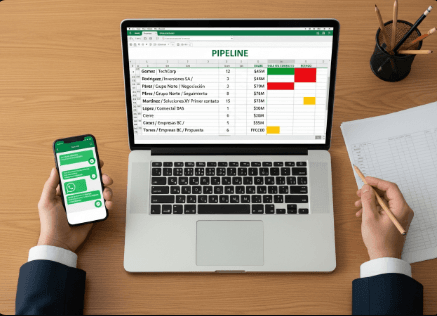
AI sales assistant for B2B sellers: prioritizes the pipeline, prepares meetings, writes follow-ups and helps close with more clarity.
Result: less administrative work and more time to sell.7-day free trial · $9.90/mo · No lock-inExplore CBC™ →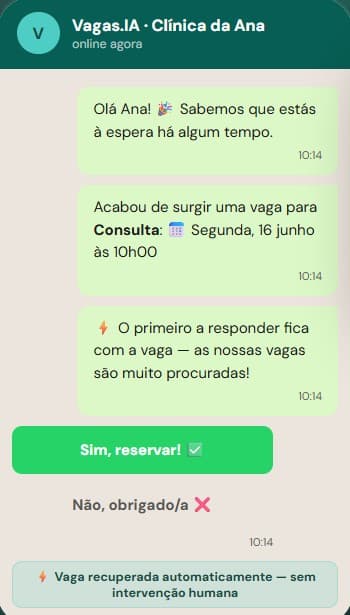
Detects slots freed by cancellations and automatically looks through your waitlist or inactive customers for someone to offer the opening to.
Result: fewer empty slots, fewer no-shows and more control over your calendar.Explore Vagas.IA →Custom AI voice and customer-service solutions for sales, support and complaints, using applied neuroscience and a cloned human voice, designed around security and applicable compliance requirements.
Result: continuous service, faster processes and a more human experience designed around the business need.Book a 30-min meeting →All solutions are designed with security, privacy and applicable compliance requirements in mind. Final legal validation depends on the use case, sector and jurisdiction.
Practical knowledge, without the noise and without needing to be a technical specialist.
10 questions · 5 critical areas
Open resource →Course · 7 days · YouTube
Open resource →Course · 7 days · YouTube
Open resource →Course · 21 days · YouTube
Open resource →Materials · free
Open resource →No. AI risk also affects professionals, small businesses and teams that use AI in their everyday work. The level of risk changes depending on the data, processes and decisions involved.
Not necessarily. We can review something that's already running, or a project you're still designing.
We look at data and privacy, access, security, human oversight, automations, agents, risks, accountability and applicable compliance.
No. Reviewing architecture, risks and controls does not replace specialized legal advice. When a situation requires legal interpretation, the appropriate professional needs to be involved.
Yes. You don't need to start from scratch. We can analyze an existing architecture, identify risk points and determine what should be improved.
No. I work with projects and professionals in Spanish and Portuguese, depending on the service and scope.
You get a first view of your main risk areas. It's a starting point, not a full audit.
Yes. Making the difficult easy — and explaining these topics in an understandable way — is exactly part of my work as a professor.
My journey moved from sales and data into automation and Artificial Intelligence. Today my focus sits where technology meets something we cannot leave to chance: security, responsibility and governance.
Start by understanding where you are today.